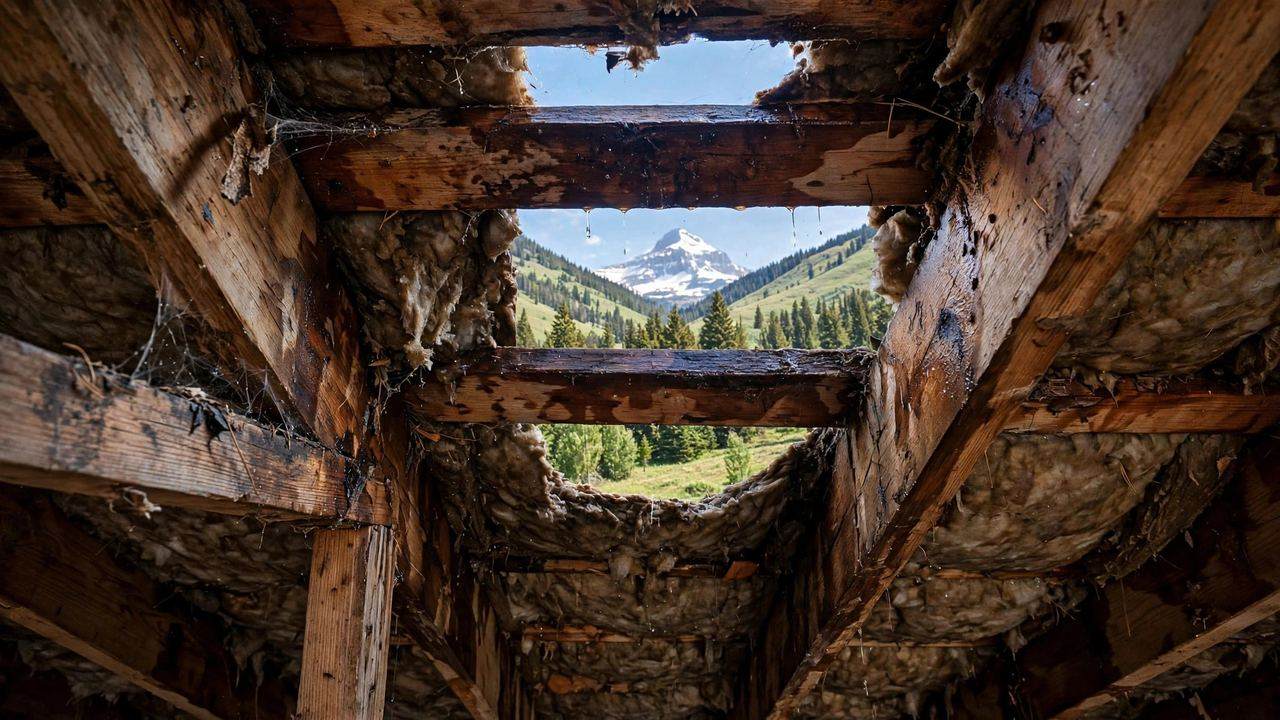
CEILING WATER DAMAGE REPAIR • PLEASANT GROVE, UTAH
Emergency Ceiling Water Damage Repair in Pleasant Grove, UT
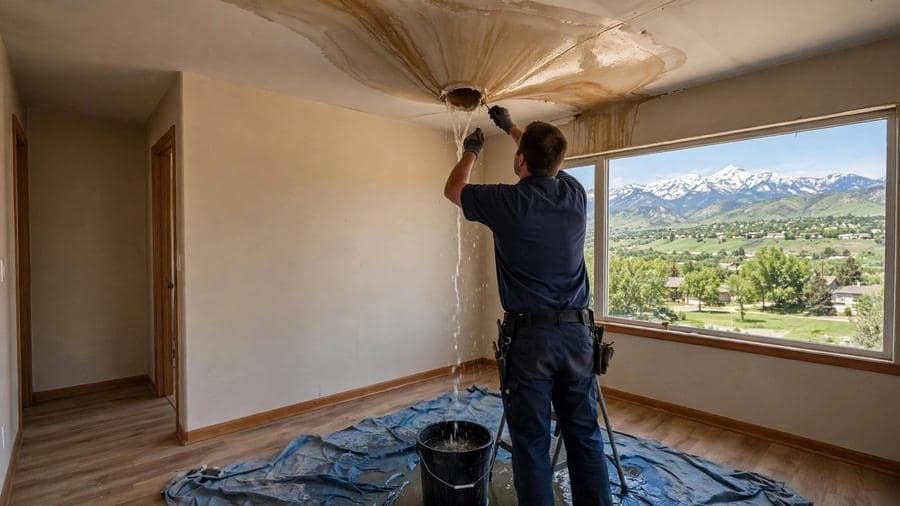
A brown stain or a sagging bulge in the ceiling means water has been pooling above the drywall, and it is looking for a way down. Our ceiling water damage repair in Pleasant Grove gets a crew dispatched immediately to drain the water safely, dry the insulation and joists above, and repair the drywall once the space is dry. Ice dams, roof leaks, swamp cooler overflows, burst pipes and upstairs bathroom leaks are all handled, 24/7.
Is a Sagging Wet Ceiling in Your Pleasant Grove Home Dangerous?
Yes. A waterlogged ceiling is heavy and can collapse without warning, bringing wet drywall, insulation and water down at once. Keep everyone out from under it.
What to do right now:
- Clear the room. Move people, pets and valuables away from the wet area.
- Turn off the lights. Switch off the breaker for any light fixture, fan or outlet near the wet ceiling.
- Stop the source if you can. Shut off the water if a pipe or bathroom is leaking above.
- Catch the drips. Put buckets and towels under the leak, and plastic over furniture and floors.
- Do not stand under a bulge. If the ceiling is sagging, let the crew drain it safely.
- Take photos. Record the stain, the bulge and anything damaged below.
What Causes Ceiling Water Damage in Pleasant Grove?
Ceiling leaks come from two places: the roof and attic above, or plumbing and fixtures in the floor above. Finding the right source decides the repair.
Ice Dams
Ice dams form along the eaves during snowy winters and force melting water back under the shingles. It often shows up as a stain near an exterior wall on a sunny winter day.
Roof Leaks and Flashing
Missing shingles, worn flashing around chimneys and vents, and leaks in roof valleys let rain and snowmelt into the attic. Many Pleasant Grove homes from the 1970s through the 1990s have brick chimneys where flashing wears out over time.
Swamp Cooler Leaks
A rooftop evaporative cooler with a stuck float or cracked line can overflow onto the roof and leak through the ceiling below. See swamp cooler leak water damage.
Bathrooms Above
Shower pans, toilet wax rings and tub drains on the upper floor are the most common cause of ceiling stains in two-story homes. See bathroom and shower leak water damage.
Burst Pipes Between Floors or in the Attic
Supply lines in exterior walls, attics and between floors can freeze and split. See burst pipe water damage.
Frozen Fire Sprinkler Lines
Fire sprinkler pipes in attics and townhome ceilings can freeze and release a large volume of water. See fire sprinkler pipe burst cleanup.
HVAC Condensate Lines
Furnaces and air conditioners in attics produce condensate that drains through a line. A clogged line or cracked pan can drip into the ceiling for weeks.
How Ice Dams Cause Ceiling Leaks in Utah Winters
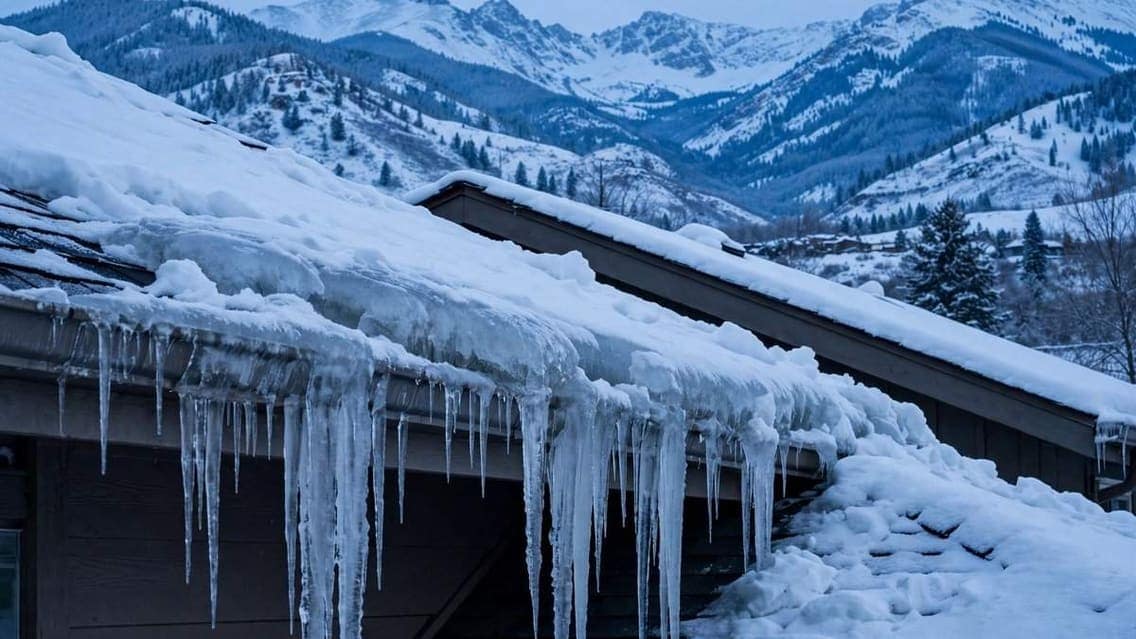
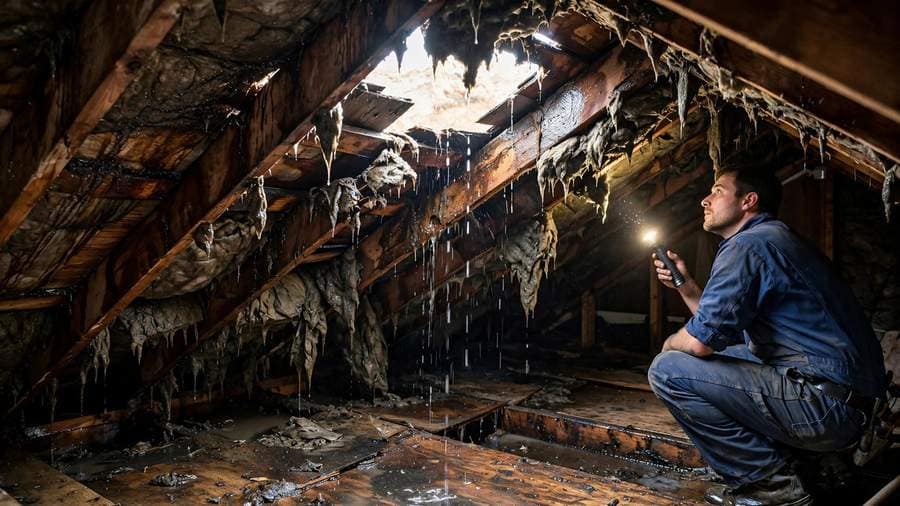
Heat escaping from the living space warms the roof and melts the snow on top of it. The meltwater runs down to the colder eaves, where it freezes again and builds a ridge of ice. More meltwater then pools behind that ridge and backs up under the shingles, where it drips onto the attic insulation and into the ceiling below.
Homes on the east bench below the canyons, where snow loads are heavier, see ice dam water damage in Pleasant Grove most often. Better attic insulation and ventilation, sealing air leaks into the attic, and clearing snow from the lower edge of the roof all reduce the risk.
Attic Frost: The Leak That Isn't a Roof Leak
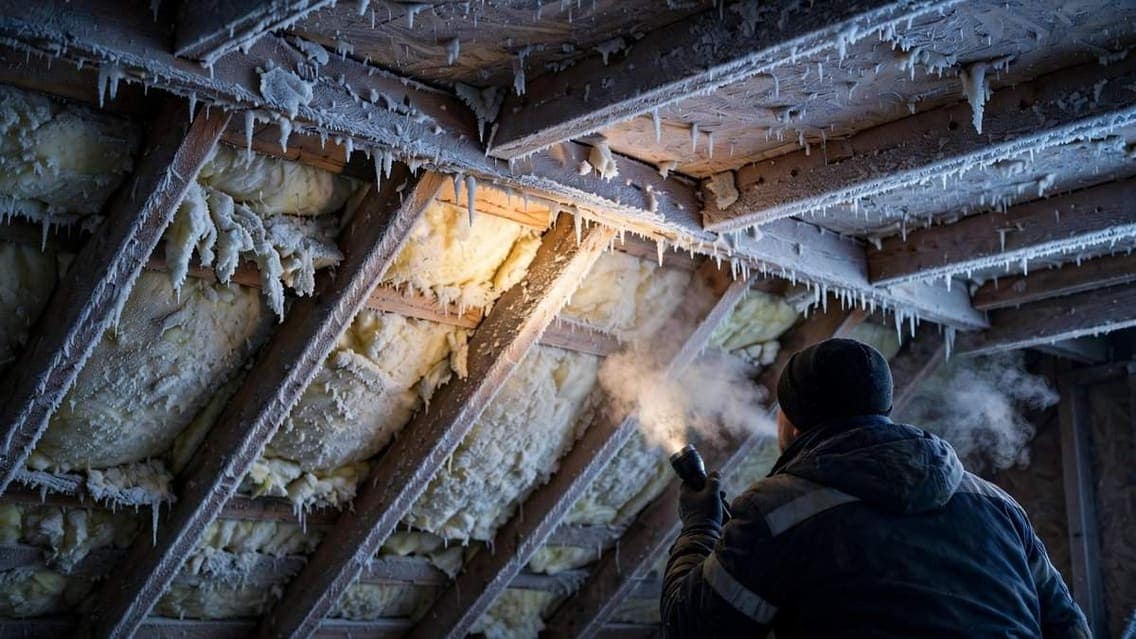
Some winter ceiling stains are not roof leaks at all. When a bathroom fan vents into the attic instead of outside, or warm air leaks up around light fixtures, the moisture freezes as frost on the underside of the roof. On the first warm day, that frost melts all at once and drips through the ceiling.
The giveaway is a stain that appears during a thaw, often in several spots, with no rain or snow on the roof. The fix is drying the attic and routing the fan to the outside, not a new roof.
Reading the Stain: What It Tells You About the Source
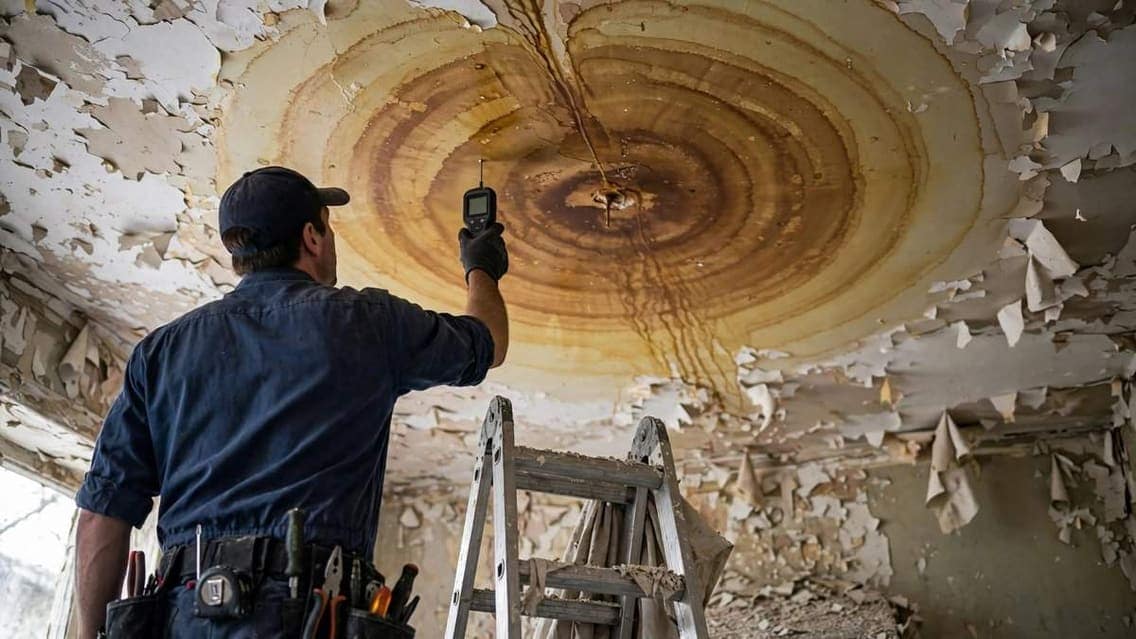
- A stain near an exterior wall that shows up on sunny winter days: ice dam or attic frost
- A stain that grows after rain or snowmelt: roof or flashing leak
- A stain under a bathroom or laundry room: plumbing, a shower pan or a washer
- A stain that keeps growing no matter the weather: an active pipe leak
- A stain under a rooftop cooler in summer: swamp cooler overflow
- Several small spots across the ceiling at once: attic frost or condensation
Can a Wet Ceiling Be Dried Without Replacing It?
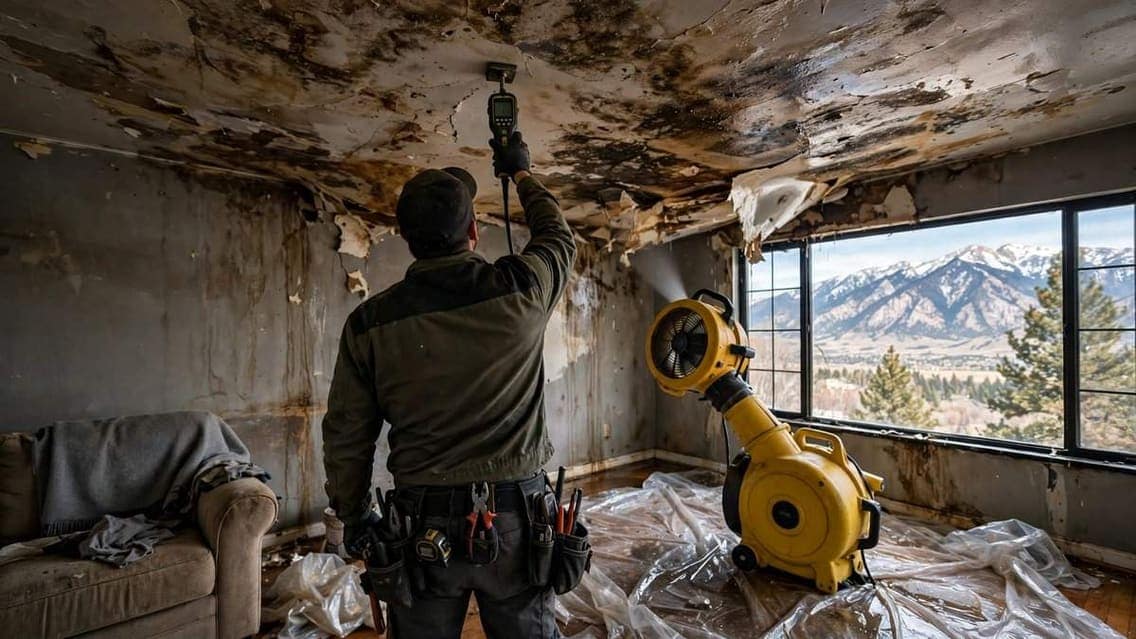
Often, yes. Drywall that got wet with clean water and is still firm can usually be dried in place with dehumidifiers and air movers, then primed and painted. Drywall that is sagging, crumbling, stained by sewage or wet for more than a couple of days usually has to be cut out and replaced.
The insulation and joists above decide the plan as much as the drywall does. Wet insulation left above a dry-looking ceiling is how mold starts.
Our Ceiling Drying and Repair Process
- Emergency response: You call (385) 346-0377 and a crew is dispatched immediately.
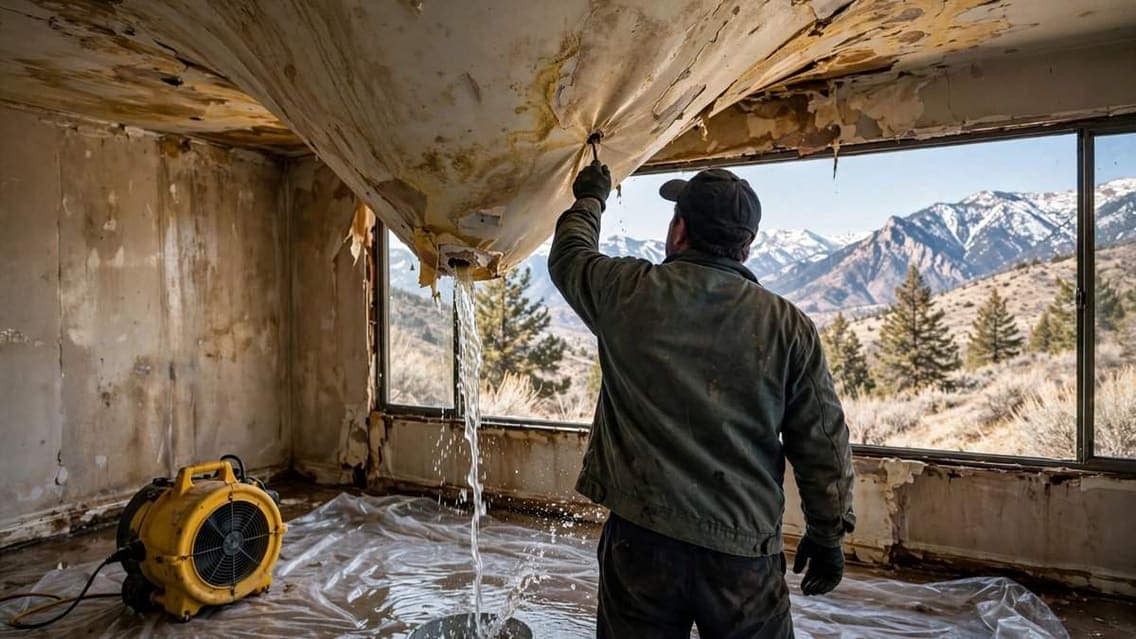
- Make it safe: Power to the area is checked and a sagging ceiling is drained through a small controlled opening.
- Find the source: Moisture meters and thermal imaging trace the water to the roof, attic or plumbing above.
- Remove what cannot be saved: Soaked drywall and insulation are documented and taken out.
- Dry the cavity: Dehumidifiers and air movers dry the joists, attic space and any walls the water reached. Learn about water mitigation.
- Check for mold: Joists and sheathing are inspected and treated if needed. See mold remediation.
- Repair: Once dry, new drywall is hung, taped and textured to match, then primed and painted.
A roofer or plumber repairs the source itself. The crew handles the water, drying and interior ceiling repair.
Wet Attic Insulation: Remove or Dry?
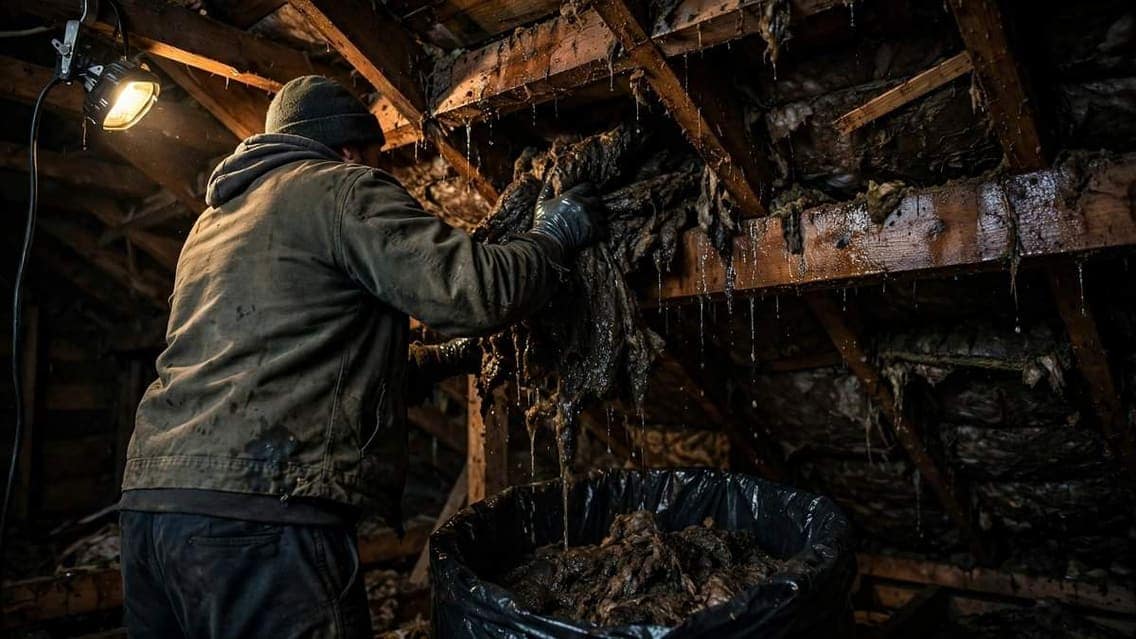
Blown-in cellulose that gets soaked usually has to be removed, because it packs down, loses its insulating value and holds moisture against the drywall. Fiberglass batts that got only a little wet can sometimes be dried, but soaked batts are usually replaced. Removing wet insulation also lets the joists and ceiling dry much faster.
Ceiling Water Damage Repair Cost in Pleasant Grove
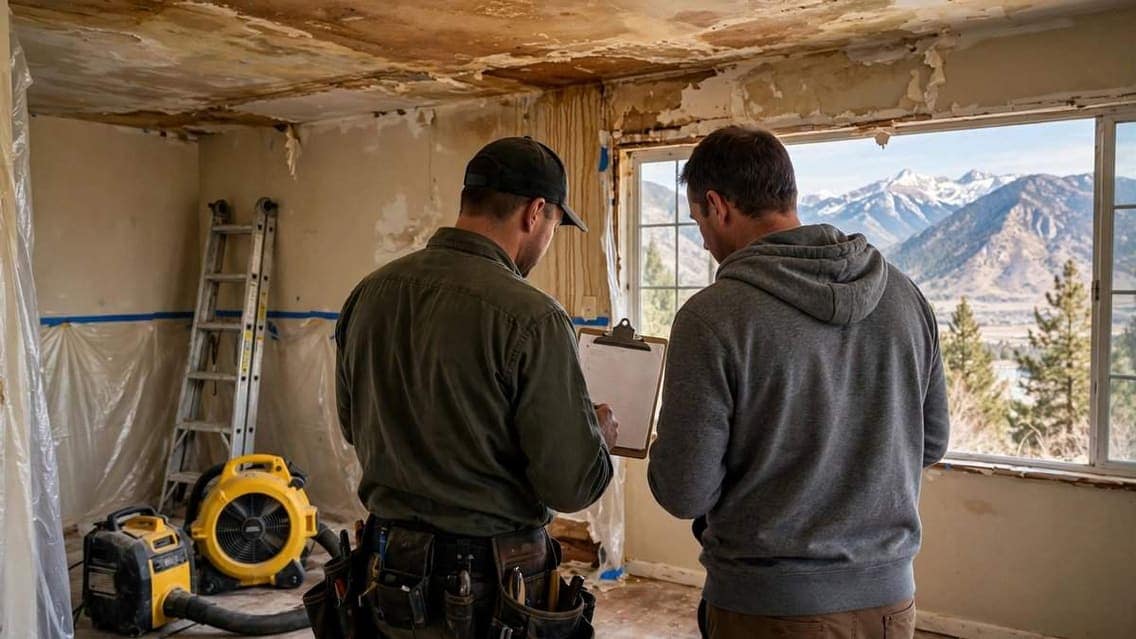
Ceiling water damage repair in Pleasant Grove usually costs between $500 and $2,500 for a small area of one room. Larger leaks that soak attic insulation or affect several rooms typically range from $2,000 to $8,000.
Cost depends on how much drywall and insulation must be replaced, whether the water spread to walls and floors below, and the texture and paint work needed to match. See the water damage restoration cost guide.
Does Insurance Cover Ceiling Water Damage?
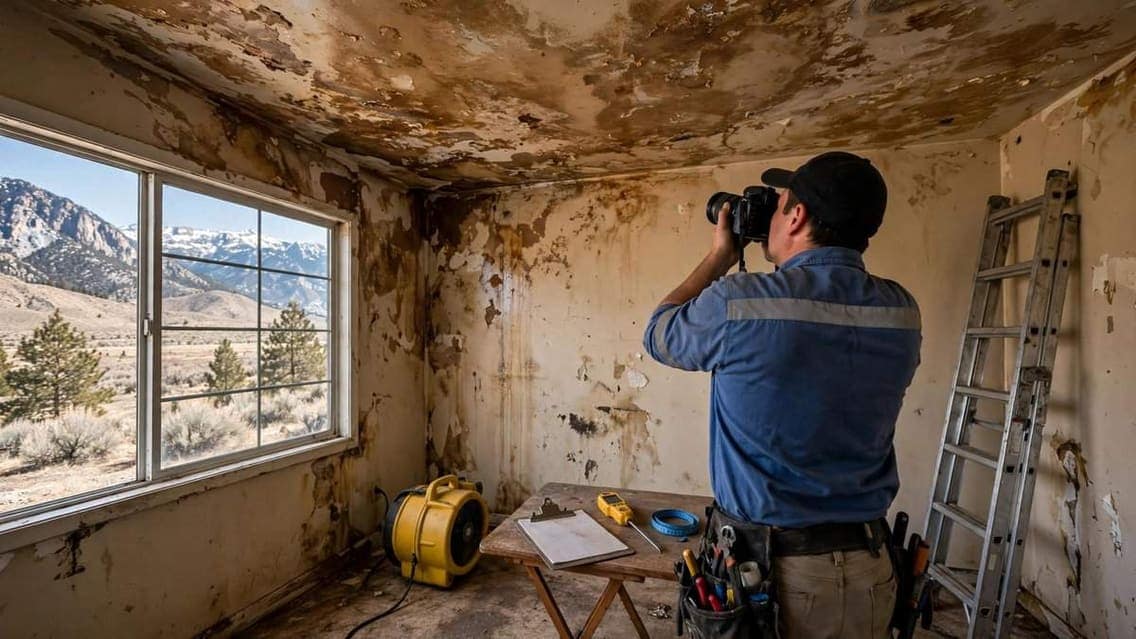
Sudden leaks, such as a burst pipe or storm damage to the roof, are usually covered. Ice dam damage is often covered as well. Leaks caused by an old roof, worn flashing or a slow drip that went on for months are commonly denied as wear and tear. Photos and moisture readings help your claim. Read the guide to water damage insurance claims.
Ceiling Water Damage FAQs
How long does a wet ceiling take to dry?
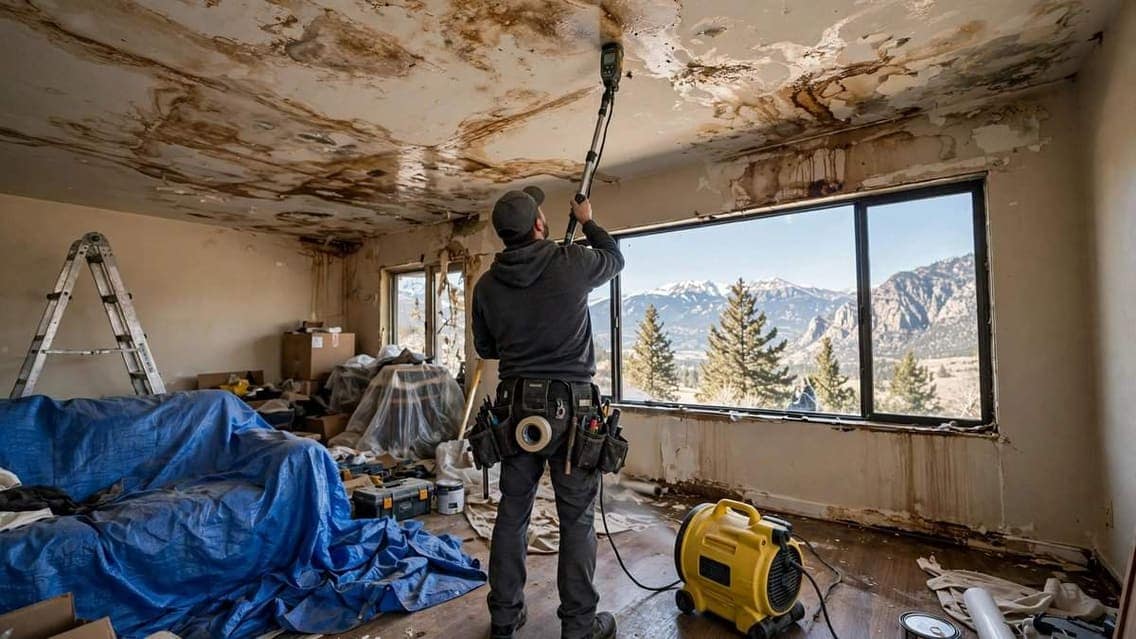
Most wet ceilings dry in two to four days with professional dehumidifiers and air movers. Ceilings with soaked insulation above, or plaster ceilings in older homes, can take longer. The drywall is not repaired until moisture readings confirm the area is dry.
Can I paint over a water stain on the ceiling?
Only after the leak is fixed and the area is confirmed dry. Painting over a water stain on ceiling drywall while it is still damp traps moisture and can lead to mold. Use a stain-blocking primer before the final coat, or the stain will bleed through.
Should I poke a hole in a sagging ceiling?
Only if the water is about to come down on its own and you can do it safely from the side with a bucket underneath. A sagging ceiling water bulge can collapse suddenly, so the safest choice is to clear the room, turn off the power to that area and let the crew drain it.
Does a ceiling stain always mean an active leak?
No. Some stains are from an old leak that has stopped. Moisture meters show whether the area is still wet. An old stain that is dry may only need sealing and paint, while a damp one needs the source found first.
Do you fix the roof too?
The roof itself is repaired by a roofer. The crew handles the water inside: draining the ceiling, drying the attic and walls, removing wet insulation and repairing the ceiling. Fixing both sides quickly keeps the leak from returning.
Why is my ceiling leaking only when it is sunny in winter?
That pattern points to an ice dam or attic frost. Sun melts snow or frost on the roof, and the water runs back under the shingles or drips from the roof sheathing into the ceiling. It needs attic drying and a fix to insulation or ventilation.
Get 24/7 Ceiling Leak Repair in Pleasant Grove, UT
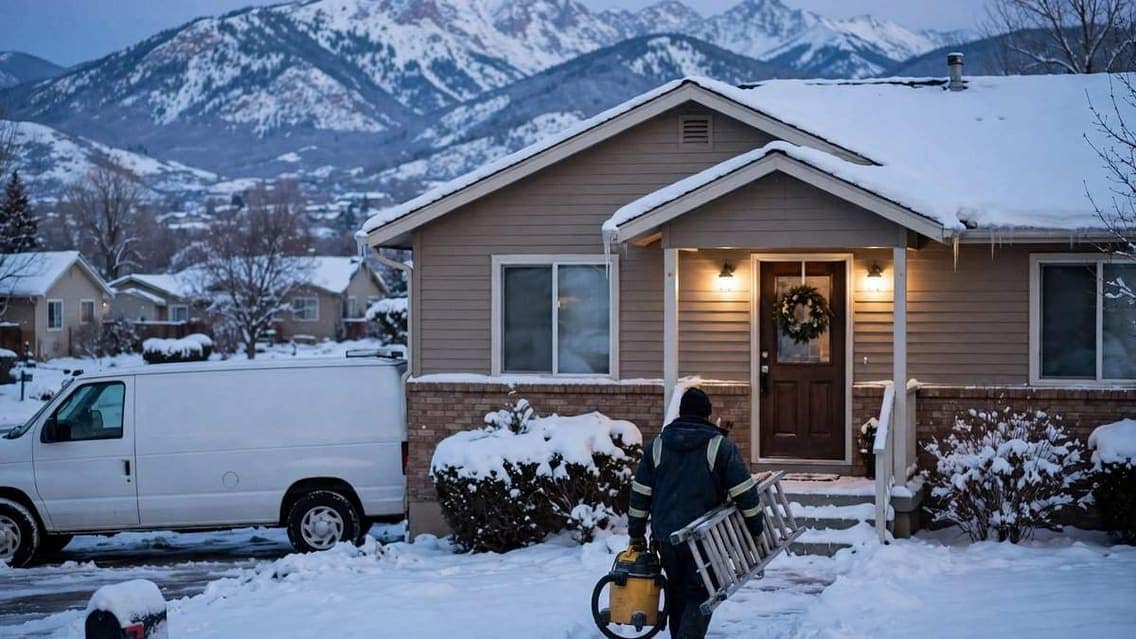
Water above a ceiling only gets heavier. For ceiling water damage repair in Pleasant Grove, roof leak water damage in Pleasant Grove homes, ice dam water damage in Pleasant Grove, UT and ceiling leak repair across Lindon, Alpine, Vineyard and American Fork, a crew is dispatched immediately.
Call (385) 346-0377 now for roof leak water damage or ice dam water damage in Pleasant Grove, UT. A crew is dispatched immediately.
Call (385) 346-0377 now for water damage Pleasant Grove 84062 help. A crew is dispatched immediately.
(385) 346-0377Get 24/7 Emergency Water Damage Help in Pleasant Grove, UT
Call (385) 346-0377 now for water damage Pleasant Grove 84062 help. A crew is dispatched immediately.