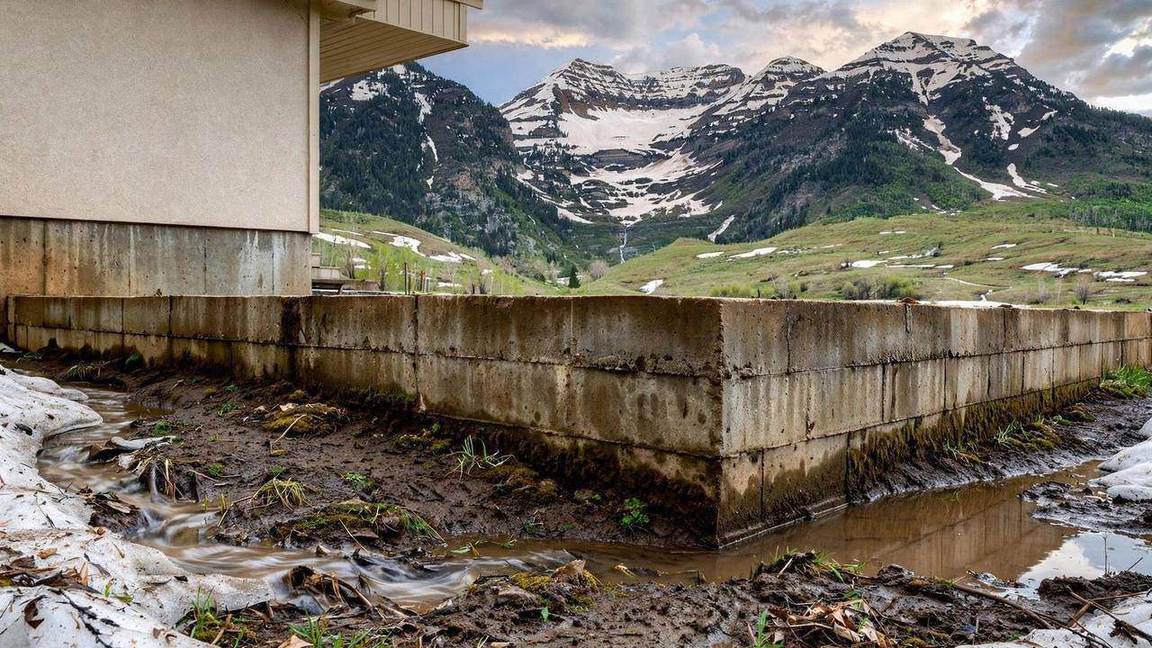
SNOWMELT BASEMENT FLOODING • PLEASANT GROVE, UTAH
Emergency Snowmelt & Spring Runoff Basement Flooding Cleanup in Pleasant Grove, UT
Every spring, the snowpack on Mount Timpanogos melts and soaks the ground across Pleasant Grove, and some of that water ends up inside basements. Our snowmelt basement flooding cleanup gets a crew dispatched immediately to remove water seeping through walls and floor cracks, dry finished rooms and find where the water is getting in. From the east-bench gravel below Battle Creek and Grove Creek to the clay soils on the west side, we handle it 24/7.
Why Do Pleasant Grove Basements Leak Every Spring?
Spring snowmelt and rain saturate the soil around Pleasant Grove homes, raising groundwater and pressing water through foundation cracks, cold joints and window wells until basements leak.
Pleasant Grove sits at the foot of the Wasatch Range, directly below Mount Timpanogos. All winter, snow piles up on the mountain and in town. When temperatures climb in spring, that water has to go somewhere. Some runs off on the surface, but much of it soaks into the ground and moves downhill underground, toward the valley and Utah Lake. Homes with full basements sit right in its path. A basement that stays dry the rest of the year can take on water for a few weeks every spring.
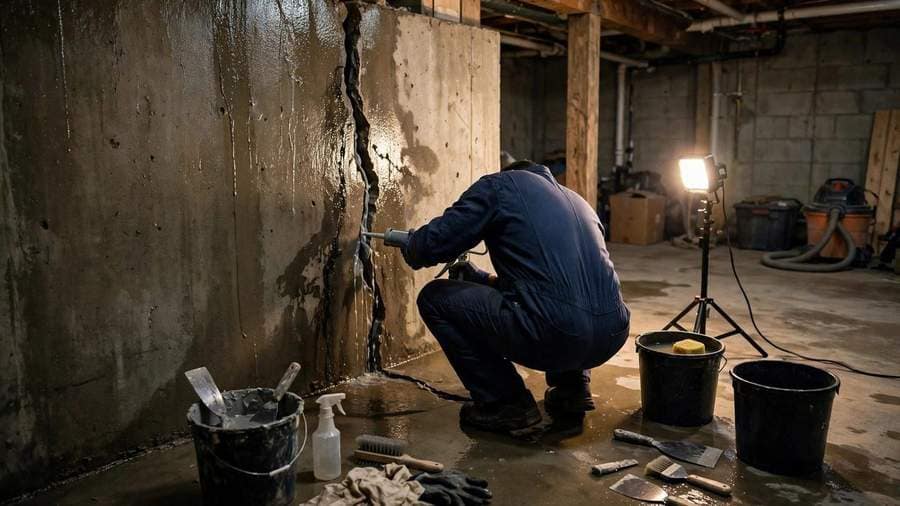
How Snowmelt Reaches Pleasant Grove Basements
The way water moves through the ground depends on which side of town you live on.
East Bench: Gravel Soils Below Battle Creek and Grove Creek
Homes on the east bench, near the mouths of Battle Creek Canyon and Grove Creek Canyon and along the Murdock Canal Trail, sit on gravel and cobble soils. Water moves quickly and sideways through these soils. Snowmelt from the mountain can travel underground and reach a deep basement wall even when the yard looks dry.
West Side: Clay Soils That Hold Water Against Walls
Homes on the west side, closer to the Utah Lake lowlands, often sit on heavy clay. Clay soaks up water slowly and holds it, so after a long melt the soil around the foundation stays saturated for weeks. That constant wet pressure pushes water through any weak point in the basement.
Rain on Snow and Fast Thaws
A warm spring rain on top of a deep snowpack, or a sudden run of warm days, releases a lot of water at once. These are the days most snowmelt flooding calls come in.
Frozen Ground and Blocked Drains
In early spring, the top layer of soil can still be frozen while the snow on top melts. Water cannot soak in, so it runs along the surface to the lowest point, often a window well or the base of the foundation. Ice in gutters and downspouts makes it worse.
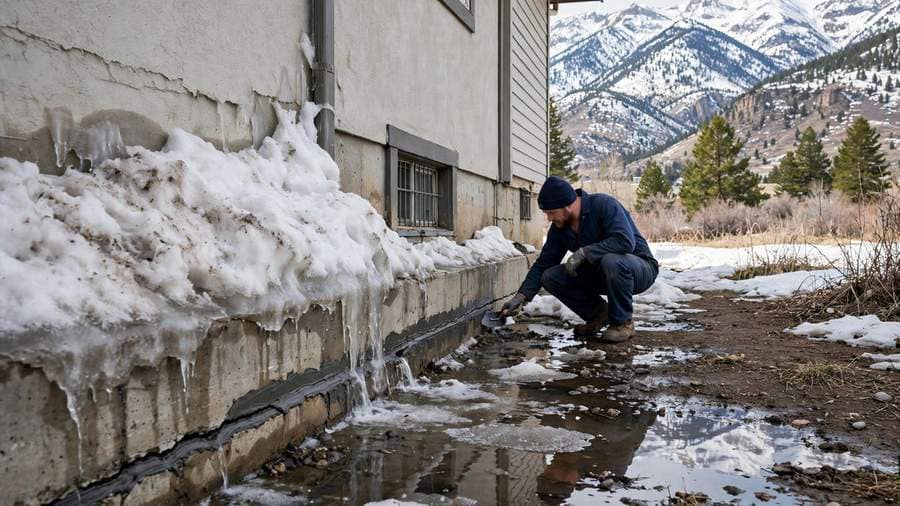
Where the Water Gets Into Your Basement
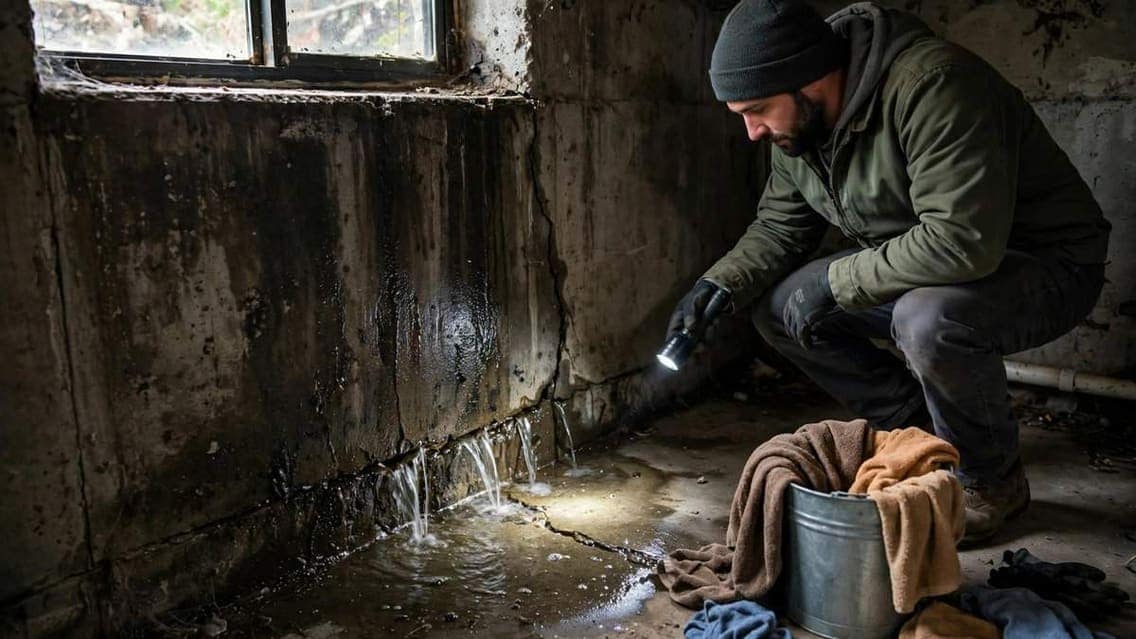
- The cold joint: The seam where the basement wall meets the floor slab, the most common entry point
- Wall cracks: Hairline and settlement cracks in poured concrete or block walls
- Tie-rod holes: Small holes left in poured walls during construction
- Floor cracks: Water rising through cracks in the slab
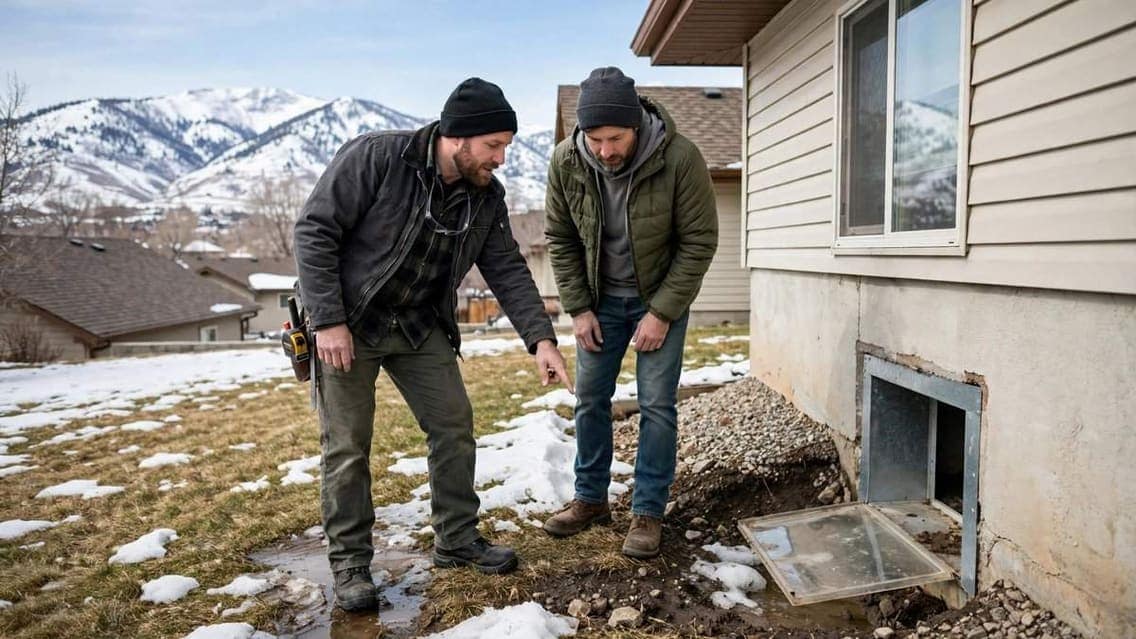
- Window wells: Snowmelt filling the well and pushing through the window. See window well flooding.
- Pipe openings: Gaps around water, sewer and utility lines entering the house
- Sump pits: A failed or overwhelmed sump pump
What Is Hydrostatic Pressure?
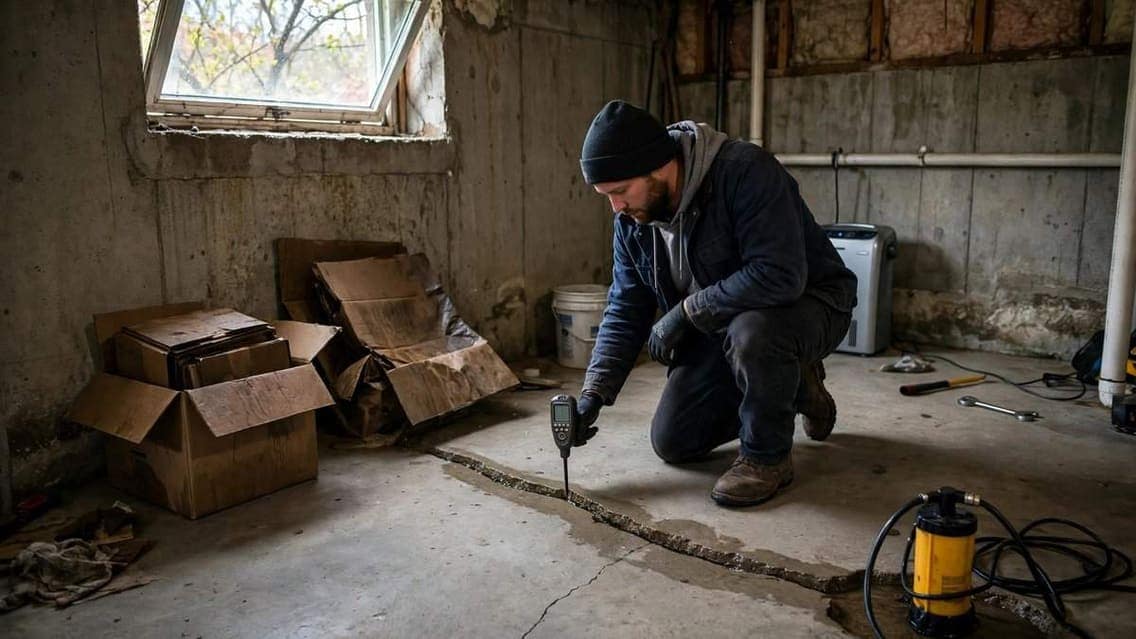
Hydrostatic pressure is the force of water in saturated soil pushing against basement walls and floors. The more water in the ground and the deeper the basement, the stronger that pressure gets. It is why water can come through cracks that seem too small to matter, and why a basement can leak in spring even with no plumbing problem at all.
Warning Signs of Foundation Seepage
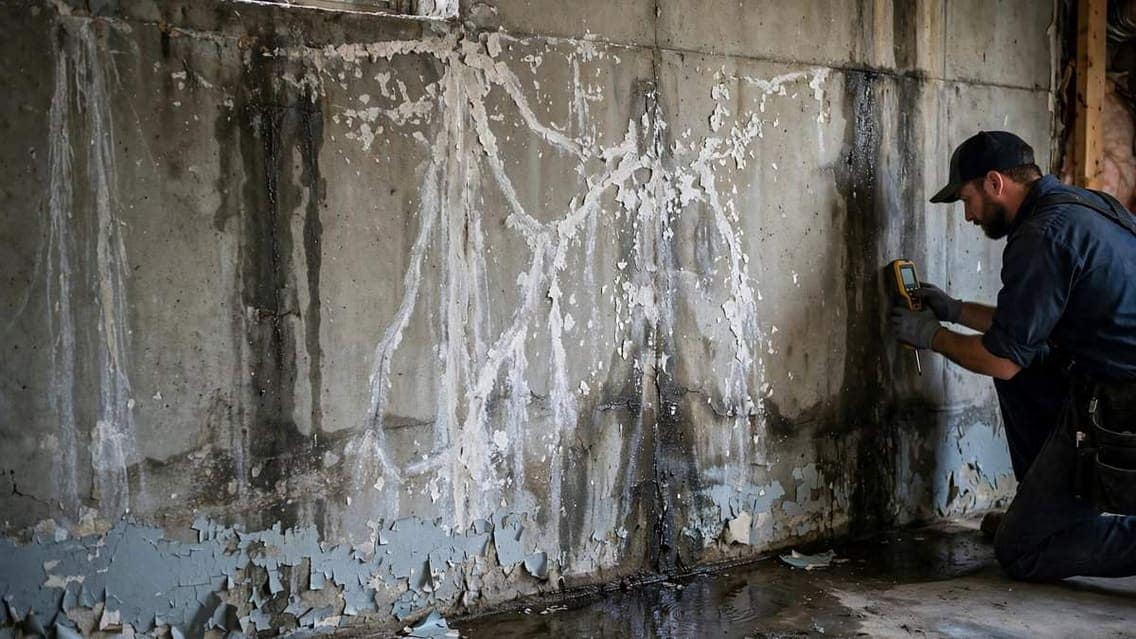
- White, chalky deposits on basement walls (efflorescence), left behind as water evaporates
- Damp or dark spots along the bottom of walls
- Carpet that feels damp along one wall
- A musty smell that shows up every spring
- Peeling paint or bubbling drywall low on basement walls
- Small puddles after warm days or rain
These signs often appear before a larger flood, so they are worth checking every March.
Is It Snowmelt, a Sprinkler Line or a Plumbing Leak?
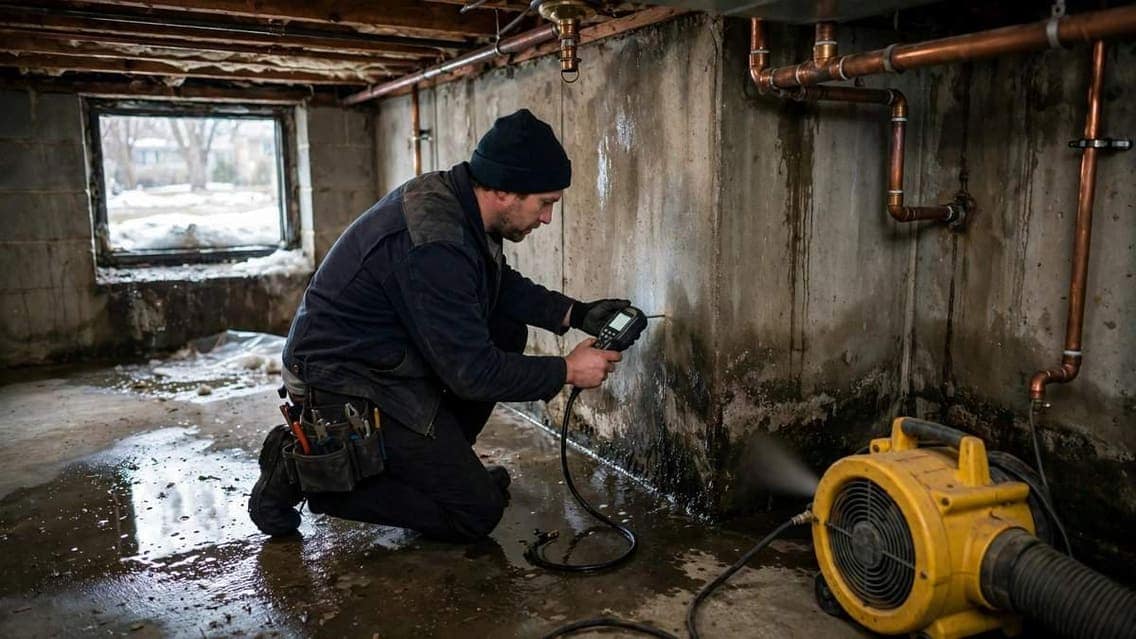
The timing of the water is the best clue.
- Shows up during warm spells or after rain in March, April or May: almost always snowmelt or groundwater.
- Only appears when the sprinklers run: a sprinkler or secondary water line. See sprinkler line leaks into the basement.
- Keeps coming no matter the weather: a plumbing leak. See burst pipe water damage.
- Comes up through the floor drain and smells: a sewer backup. See sewage backup cleanup.
Our Spring Runoff Water Cleanup Process
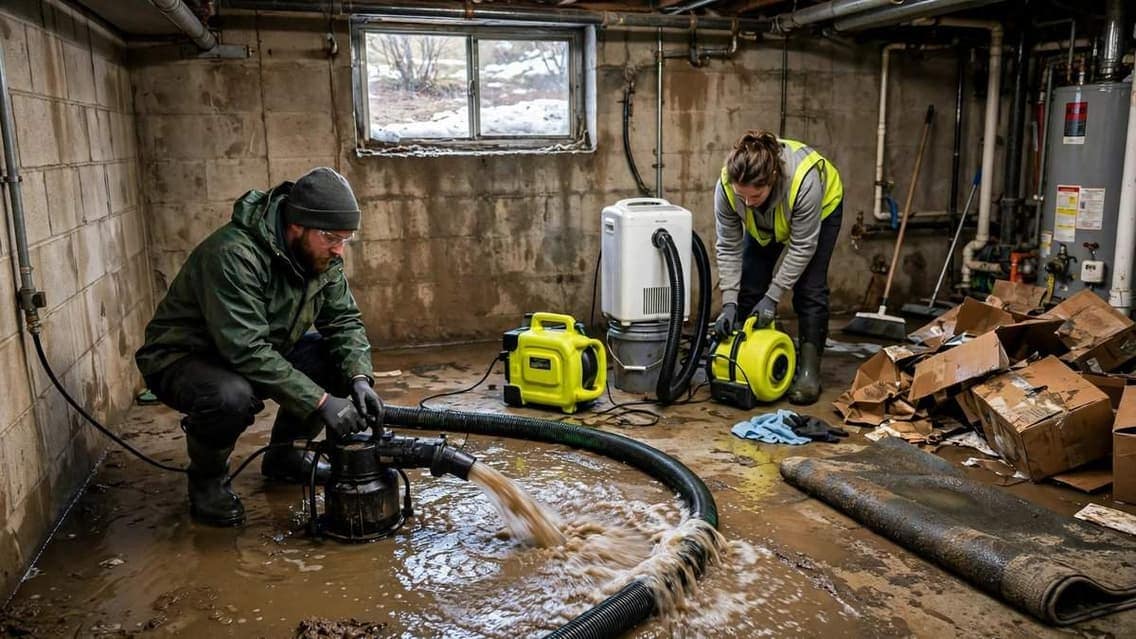
- Emergency call: You call (385) 346-0377 and a crew is dispatched immediately.
- Pump and extract: Standing water is pumped out and extracted from carpet and floors. See emergency water extraction.
- Trace the entry points: Moisture meters and thermal imaging show which walls and joints are letting water in.
- Remove what cannot be saved: Wet carpet pad, insulation and the lower part of soaked drywall are documented and removed.
- Dry the basement: Dehumidifiers and air movers run until walls, floors and framing reach a dry standard. Learn about water mitigation.
- Clean and treat: Wall cavities and floors are cleaned and treated to inhibit mold.
- Point out the fixes: You get a clear picture of where water entered so a drainage or foundation contractor can address it.
Preparing Your Home Before Spring Runoff
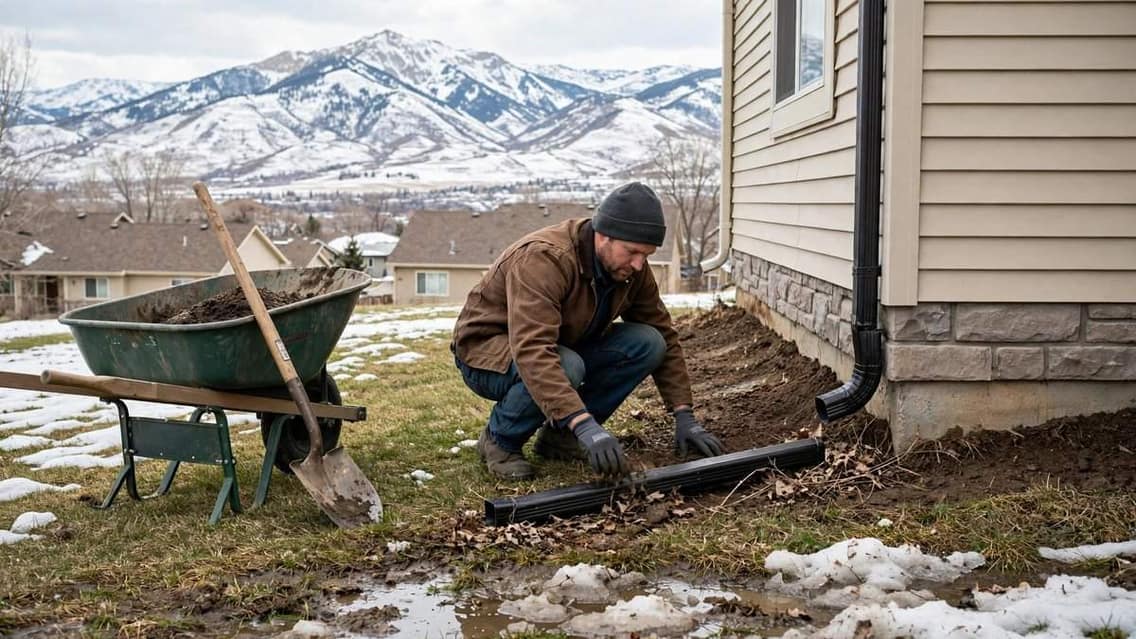
- Extend downspouts several feet away from the foundation
- Make sure soil slopes away from the house on every side
- Clear snow piles away from the foundation and window wells
- Clean window well drains and add covers
- Test your sump pump and add a battery backup
- Clear ice and debris from gutters before warm spells
- Move valuables and boxes off the basement floor
- Check your insurance for groundwater and sump overflow coverage
Do You Need Flood Insurance in Pleasant Grove?

Standard homeowners policies usually exclude damage from groundwater seepage and surface flooding. Flood insurance through the National Flood Insurance Program covers surface flooding, and a sump or water backup endorsement can cover an overflowing sump pump. Groundwater seepage through walls is often not covered by any of these, which is why prevention matters. Read the guide to water damage insurance claims.
Snowmelt Basement Flooding Cleanup Cost in Pleasant Grove

Snowmelt basement flooding cleanup in Pleasant Grove usually costs between $2,500 and $10,000, depending on how much of the basement is finished, how deep the water got and how long it seeped before it was found. See the water damage restoration cost guide.
Snowmelt Flooding FAQs
When is snowmelt flooding worst in Utah County?
Most snowmelt flooding happens from March through May, during warm spells and spring rain. In years with a large snowpack, runoff can continue into June. The first several warm days after a heavy winter are usually the riskiest.
Is groundwater seepage covered by homeowners insurance?
Usually not. Most standard policies exclude water that comes through the foundation from the ground. A sudden event like a burst pipe is treated differently. Check your policy and consider a water backup or sump endorsement.
Can a sump pump stop snowmelt flooding?
A working sump pump with a battery backup can handle a lot of groundwater, but only if the home has a sump pit and drain system. Test it before spring and keep its discharge line clear of ice and pointed away from the house.
Should I seal my basement walls from the inside?
Interior sealers can help with minor dampness, but they do not stop water under hydrostatic pressure. Long-term fixes usually involve grading, downspouts, window well drains or exterior drainage work by a foundation contractor.
Will my basement flood every spring now?
Not necessarily. If water got in through a clogged window well, a short downspout or poor grading, fixing those often solves it. If the water came through the foundation itself, it is likely to return until the drainage is improved.
How long does a basement take to dry after seepage?
Most basements dry in three to five days with professional equipment once the water stops. If the ground outside is still saturated, drying can take longer and the area should be monitored until the runoff ends.
Get 24/7 Snowmelt Flooding Help in Pleasant Grove, UT
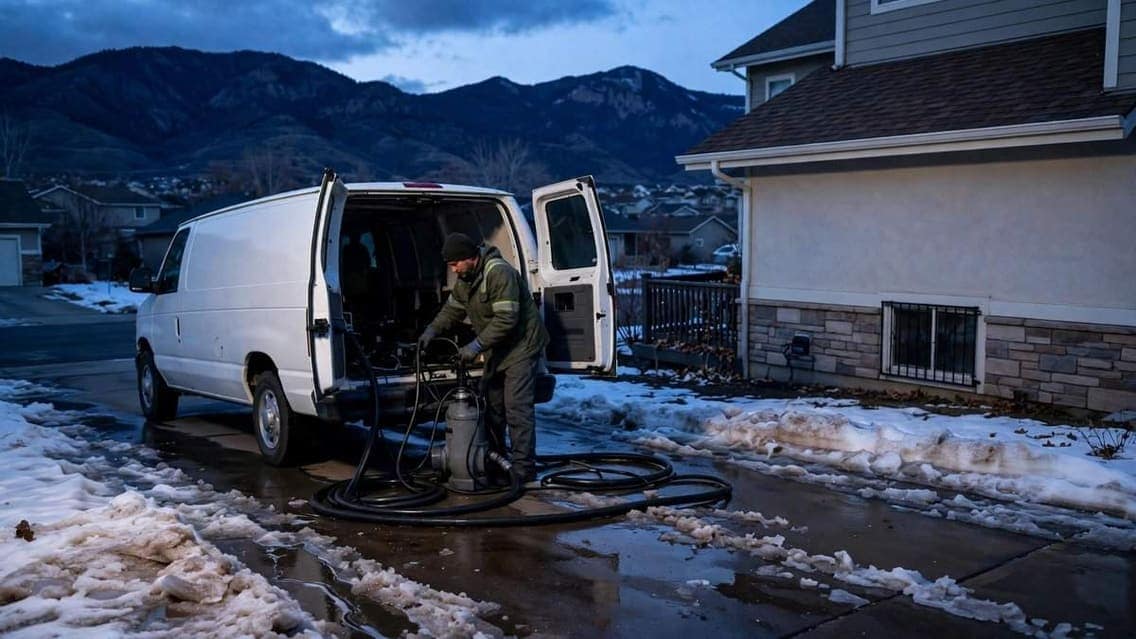
Spring runoff does not wait for a convenient time. For snowmelt basement flooding in Utah County, spring runoff basement flooding in Pleasant Grove, snowmelt flooding in Pleasant Grove, UT, and groundwater basement cleanup across Lindon, Alpine, Vineyard and American Fork, a crew is dispatched immediately.
Call (385) 346-0377 now for spring runoff basement flooding in Pleasant Grove or snowmelt flooding in Pleasant Grove, UT. A crew is dispatched immediately.
Call (385) 346-0377 now for water damage Pleasant Grove 84062 help. A crew is dispatched immediately.
(385) 346-0377Get 24/7 Emergency Water Damage Help in Pleasant Grove, UT
Call (385) 346-0377 now for water damage Pleasant Grove 84062 help. A crew is dispatched immediately.